Helping Your Child Feel at Home in Two Houses
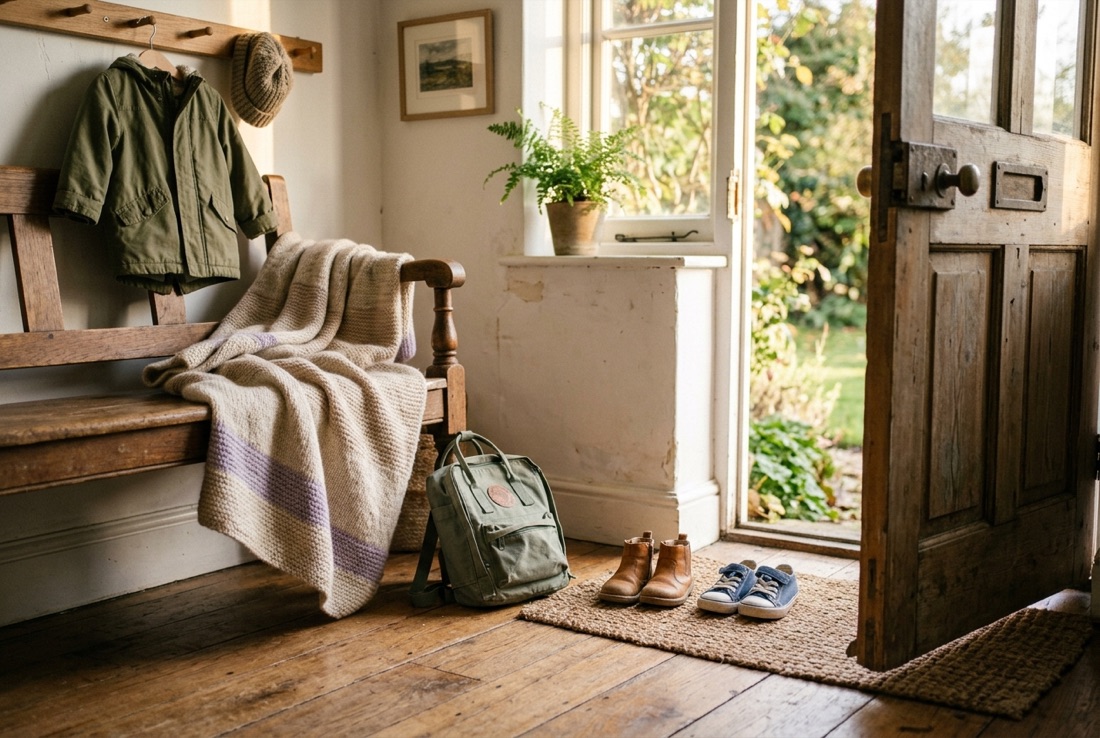
When your family lives across two homes, it's natural to worry that your child feels like a visitor in one of them, or a permanent traveller with a bag by the door. That worry is a sign you're paying attention, not a sign anything is broken. The good news is that children adjust to two homes far better than most parents fear, and much of what helps is small, ordinary and completely within your reach.
This article walks through what "feeling at home" actually means for a child living between two houses, and the concrete things each parent can do, separately, to build it. You won't need your co-parent to agree on everything for most of this to work.
What "at home" really means for children in two homes
For children in two homes, belonging isn't about square footage, a bigger TV or which parent has the nicer garden. A child feels at home when a place is predictable, welcoming and clearly theirs. That means they know where their toothbrush lives, they know what tends to happen after dinner, and they don't have to ask permission to open the fridge or curl up on the sofa.
Two homes can absolutely deliver that, but the two houses don't need to be identical. Trying to make them mirror images of each other usually backfires: it turns natural differences into a competition. What children need is that each home is stable in its own right. Dad's flat can be the cosy, early-bedtime place and Mum's house can be the one with the big garden and later weekend mornings. Difference is fine. Chaos is what unsettles them.
Give your child a real space, not a guest room
One of the fastest ways to signal "you live here too" is to give your child a space that stays theirs even when they're at the other home. Ideally that's their own room, but a designated corner, a shelf, a drawer or a labelled box works when space is tight.
- Let them choose something about the space: the bedding, a poster, where the lamp goes.
- Keep some of their things out and visible between stays, not packed away. A room reset to "guest neutral" every handover quietly tells a child they're temporary.
- Duplicate the boring essentials so nothing has to travel: toothbrush, pyjamas, chargers, a few basic clothes, school supplies.
Duplicating the basics also does something for the child's emotional load: they're not responsible for remembering everything, and a forgotten item at one house doesn't turn into a small crisis. If you want a practical starting point, our two-homes packing checklist breaks down what to duplicate, what should travel and what to never forget.
Keep the rhythms of daily life recognisable
Children read safety through routine far more than through conversations about safety. When bedtime, mealtimes, homework and screen habits look roughly similar across both homes, transitions get easier because less has to be renegotiated each week.
You don't need a signed treaty for this. A lot can be aligned quietly and independently: a consistent bedtime window, homework before screens, a similar weekend rhythm. Where you can find common ground with your co-parent on the big anchors, do; where you can't, focus on making your home reliable rather than winning a rule war. We go deeper on this in our guide to keeping routines consistent across two homes.
A note on different rules
It's normal, and okay, for the two homes to have somewhat different rules. Children are perfectly capable of understanding that "at Dad's we do it this way, at Mum's we do it that way," the same way they already know school and home have different rules. What they struggle with is being asked to choose, or being made to feel that following one home's rules is a betrayal of the other.
Make transitions gentle, not jarring
The handover day is where two-home life is most visibly a two-home life, and it's often when a child feels the wobble most. A child can be perfectly happy at both houses and still find the moving between them hard. That's not a sign the arrangement is wrong.
A few things soften the edges:
- Predictability. Kids do better when they know the schedule. A shared family calendar they can glance at, so "where am I sleeping tomorrow?" is never a mystery, removes a surprising amount of low-grade anxiety.
- A buffer. Don't schedule the handover straight into a demanding activity. A little decompression time, a snack, a quiet half hour helps a child land.
- A transition object. A soft toy, a specific hoodie or a small ritual that travels between homes gives younger children continuity to hold onto.
- Neutral, warm goodbyes. "Have a brilliant time, I love you, see you Sunday" beats a tearful, guilt-laden send-off. Your calm tells them this is safe and normal.
Try to resist quizzing your child about the other home the moment they walk in. A curious "how was your week?" is lovely; an interrogation about what the other parent bought, said or did puts a child in the middle. If handovers are a recurring flashpoint, a co-parenting app like Hyphen can keep the schedule and logistics in one calm, shared place so the exchange itself stays about the child, not the admin.
Protect your child from the space between the two homes
The single biggest factor in how well children cope with two homes isn't the schedule or the houses. It's how much conflict they're exposed to and whether they feel free to love both parents openly.
Children need explicit, repeated permission to be happy in both homes. Simple, low-key messages do enormous work:
- "I'm really glad you have a great time at your dad's."
- "It's okay to miss Mum when you're here. You can call her."
- "You don't have to choose. You get to love us both."
Just as important is what you keep off your child's shoulders. Avoid using them as a messenger, an emotional confidant about your ex, or a source of information about the other household. Even small comments land heavily on a child who is trying to stay loyal to both parents. Keeping adult logistics in an adult channel, rather than routed through your eight-year-old, is one of the kindest structural choices you can make.
Let the adjustment take the time it takes
Feeling at home in two houses is a process, not a switch that flips on move-in day. In the early weeks and months, some wobble is completely expected: clinginess at handovers, a few more tears at bedtime, testing the rules, or a child who insists one home is "better." This usually settles as the new normal becomes, simply, normal.
Take the example of Léa, seven, who spent the first couple of months announcing that she "only wanted to live at Mummy's." Her dad didn't argue or take it personally. He kept his home warm and predictable, kept goodbyes gentle, and let her call her mum whenever she wanted. By the school holidays she'd stopped mentioning it. Nothing dramatic changed, except time and consistency did their quiet work.
That said, keep a gentle eye out. Persistent sleep problems, withdrawal, a lasting drop at school or big shifts in behaviour that don't ease over time deserve attention, and sometimes support from a professional. It's worth knowing the difference between normal adjustment and something that needs more help; our piece on signs a child is struggling with separation can help you tell them apart.
Small habits that make both homes feel like home
None of this rests on one grand gesture. It's the accumulation of small, repeatable things:
- Talk about "your home here" and "your home there" rather than "my house" and "your mum's house."
- Put family photos in both homes, including photos with the other parent. Their family didn't disappear; it reorganised.
- Keep something ongoing in each place: a book they're reading, a Lego build in progress, a plant they water. Continuity gives a child a reason to look forward to coming back.
- Have a few rituals unique to each home. A Friday film night at one, pancakes on the first morning at the other. Distinct traditions make each place special rather than a lesser copy.
- Speak neutrally, or warmly, about the other home. Your child hears everything, and your ease becomes their ease.
Two homes will never be exactly the same as one, and they don't need to be. Children raised across two loving, stable households can thrive, feel deeply at home in both, and grow up secure. What makes the difference is rarely money or the perfect schedule. It's warmth, predictability, and a child's freedom to belong fully in both places without having to choose.
Put this into practice with Hyphen
Shared custody calendar, calmer messaging and expense tracking — everything you need to co-parent peacefully, in one app.
Download Hyphen on the App StoreFrequently asked questions
How long does it take for a child to adjust to living in two homes?
Most children need a few weeks to a few months to settle into a new two-home routine, though it varies with age and temperament. Consistency and gentle handovers speed things up. If distress is intense or lasts well beyond the early adjustment period, it's worth speaking to a professional.
Should both parents' homes have exactly the same rules?
No, and trying to force it usually creates more friction than it solves. Children easily grasp that each home does some things differently. It helps to align the big anchors like bedtime and homework where you can, but small differences between homes are normal and fine.
My child says they prefer the other parent's house. What should I do?
Try not to take it personally or argue the point. It's often a way of expressing a bigger feeling, or simply testing that your love is steady. Keep your home warm and predictable, reassure them it's okay to love both homes, and let them stay in touch with the other parent freely.
Does having two homes harm children?
Two homes on their own don't harm children. What affects them most is the level of conflict they're exposed to and whether they feel free to love both parents. Children in two stable, low-conflict households generally adjust well and thrive.
How can I help my child not forget things between houses?
Duplicate the everyday essentials so little has to travel: toothbrush, pyjamas, chargers and some basic clothes at each home. A simple shared checklist for the few items that do move keeps handovers calm and takes the mental load off your child.
Keep reading
Birthdays, School Shows and Special Events: Showing Up as Co-Parents
Birthday shared custody plans, school shows and holidays: practical ways to show up as co-parents without tension. Keep the day about your child.
7 min read
When Your Child Becomes the Messenger Between Homes: How to Take Them Out of the Middle
"Tell your dad..." Using a child messenger after divorce quietly harms them. Here's why it happens and concrete ways to take your child out of the middle.
6 min read
When Your Child Refuses to Go to the Other Parent's Home
When your child refuses to visit a parent, it's rarely rejection. Understand the real reasons and get calm, concrete steps to respond and ease transitions.
7 min read