School Success in Shared Custody: A Practical Guide

Between two houses, two backpacks and two routines, school can feel like the thing most likely to slip through the cracks. A forgotten reading log on a Tuesday, a permission slip signed by one parent and lost by the other, a report card only one of you saw. If you are tired and doing your best, none of this means you are failing your child.
This guide walks through the practical side of school shared custody: keeping homework on track across two homes, communicating with teachers as a team, and following grades so no one is left in the dark. The goal is not perfection. It is a system steady enough that your child can focus on being a student, not a messenger.
Why school shared custody needs its own system
When you all lived under one roof, school logistics ran on proximity. The backpack was by the door, the calendar was on the fridge, and if something was forgotten, one of you could just ask the other across the room. After separation, that shared context disappears. Information now has to travel between homes, and anything that has to travel can get lost.
The children feel this most. A ten-year-old should not be the courier who remembers to tell Dad about the field trip because the note stayed at Mum's. When kids carry that responsibility, two things happen: important details fall through, and the child absorbs a low, constant stress that has nothing to do with schoolwork itself.
So the first shift is mental: treat school information as something the two of you own together, not something each household discovers on its own. The tools below all serve that one idea.
Keeping homework on track across two homes
Homework is where the two-home gap shows up daily. A project started on your week is due during your co-parent's week. A worksheet lives in the wrong bag. The fix is rarely more discipline from the child; it is a shared structure both homes recognize.
- Agree on one homework rhythm. If homework happens after a snack and before screens at one house, aim for the same at the other. Children who move between two very different expectations spend energy re-adjusting instead of working. Aligning the basics on consistent routines across two homes makes homework feel like a habit, not a negotiation.
- Let the schoolbag be the constant. Whatever changes between houses, the backpack and its contents travel with the child. Books, chargers and the planner live in the bag, not in a bedroom drawer.
- Duplicate the boring supplies. Pencils, a ruler, a calculator, a quiet surface with decent light — keep a basic set at each home so a missing item at one house never derails an evening.
- Use the school planner as the single source of truth. Whether it is a paper planner or a school app, both parents check the same place. That way "I didn't know it was due" stops being anyone's excuse.
Take Léa, nine. Her parents agreed that homework happens at the kitchen table right after the after-school snack, in both homes, and that her reading book always goes back in the front pocket of her bag. Small, dull agreements — but they turned a nightly source of tension into an autopilot.
Communicating with teachers as a co-parenting team
Teachers can only work with what they know. If they are unaware that a child lives in two homes, they may send a single copy of everything, assume one parent speaks for both, or read a missed deadline as disorganization rather than a note that stayed at the other house.
Tell the school early, and keep it neutral
Near the start of the year, let the teacher know — briefly and without detail about the separation itself — that your child spends time in two homes and that both parents want to stay informed. You are not sharing your story; you are giving the school what it needs to support your child. Ask a simple, practical question: how can both parents receive communications, newsletters and report cards?
Ask for two channels wherever possible
Many schools can add a second email address, send duplicate paper copies, or give both parents access to the online grade portal. It is a small administrative step that removes a whole category of "I never got that." If the school can only reach one parent, agree between yourselves who forwards what, and actually do it the same day.
Present a united, low-key front at meetings
Parent-teacher conferences do not require you to arrive together or pretend everything is warm. They require you both to stay focused on the child. If attending the same meeting is genuinely too tense, ask whether the teacher offers separate slots. Whatever you choose, keep adult conflict out of the room — the teacher's job is your child's learning, not refereeing.
Following grades and progress from two homes
Grades are only useful if both parents can actually see them. Otherwise one of you is always a step behind, learning about a slipping maths mark weeks after the other could have helped.
- Get both parents onto the grade portal. Most online school systems allow more than one guardian login. Set this up once and you both see marks, absences and messages in real time.
- Agree what counts as "worth flagging." You do not need to relay every spelling quiz. Decide together on the signals that matter — a failed test, a comment about behaviour, a teacher's note asking for a meeting — and make sure those always cross between homes.
- Watch trends, not one-off blips. A single low grade after a rough week is not a crisis. A steady slide over a month is worth a calm conversation. Looking at the pattern together keeps you from over-reacting or missing something real.
- Keep the child out of the reporting chain. "Ask your father if he saw your grade" turns a nine-year-old into your messenger. The information should reach the adult directly.
This is where sharing the load matters more than sharing every opinion. You will not always agree on how to respond to a mediocre term. But if you both have the same information at the same time, you are reacting to reality, not to a partial account relayed through a tired child.
Sharing school information without friction
Behind homework and grades sits a larger question: how does day-to-day school information move between two homes reliably? Term dates, the swimming kit needed on Thursdays, the class trip that needs a signed form and twelve euros, the allergy the new teacher must know about.
Scattering this across texts, emails and memory is how things get dropped. A shared, neutral place both parents check works far better than a stream of one-off messages. A co-parenting app like Hyphen can hold the school calendar, documents and reminders in one spot both homes see, so a class outing does not depend on one parent remembering to forward a photo of the note. The same principle applies to sharing essential health and school information between homes: put it somewhere shared, not somewhere personal.
Whatever tool you use — an app, a shared calendar, even a well-kept notebook that travels — the test is the same: if you were unreachable for a week, could your co-parent find everything the school needs? If yes, your system is doing its job.
Helping your child feel settled enough to learn
Academic success rests on something quieter: a child who feels secure. A kid worried about which house they are at on Friday, or carrying tension between their parents, has less attention left for fractions and spelling.
- Make the week predictable. Children who know where they will be, and where their school things are, spend less energy on logistics and more on learning. Helping them feel at home in both houses directly supports focus.
- Protect a calm study space in each home. It does not need to be a dedicated room — a cleared corner with good light and few distractions is enough. What matters is that it exists in both homes.
- Keep your worries between adults. If you are anxious about grades, work it out with your co-parent, not by pressuring your child. Kids read our stress and often blame themselves for it.
- Notice effort, not only outcomes. "I saw how you stuck with that maths" travels well between two homes and builds a learner who keeps trying — which matters more, long term, than any single grade.
A simple starting point for the school year
You do not have to build all of this at once. Pick a few durable moves and let them settle before adding more:
- Tell the school, near the start of term, that your child lives in two homes and ask how both parents can receive information.
- Get both parents onto the online grade portal, or arrange duplicate communications.
- Agree one homework rhythm and keep the schoolbag as the travelling constant between houses.
- Choose one shared place — an app, calendar or notebook — where school dates, forms and reminders live for both homes.
- Decide together which signals are always worth flagging, and keep your child out of the messenger role.
None of this requires you and your co-parent to be close. It requires you to be reliable, in parallel, about the same handful of things. Do that, and school becomes one less place where the separation shows — and one more place where your child simply gets to be a student.
Put this into practice with Hyphen
Shared custody calendar, calmer messaging and expense tracking — everything you need to co-parent peacefully, in one app.
Download Hyphen on the App StoreFrequently asked questions
How do we handle homework when it's due during the other parent's week?
Treat the school planner or school app as the single source of truth that both homes check, and keep all homework in the child's backpack rather than in a bedroom. That way a project started on one week can be finished the next, wherever the child happens to be. Agreeing on a similar homework routine in both homes also helps a lot.
Should both parents attend parent-teacher conferences together?
It helps if you can, but it is not mandatory. What matters is that both parents stay informed and keep adult conflict out of the meeting. If attending together is too tense, ask the teacher whether separate slots are possible — many schools accommodate this.
How can both parents receive the child's grades and school news?
Ask the school early in the year to add a second parent email, send duplicate paper copies, or grant both parents a login to the online grade portal. Most systems allow more than one guardian account. This removes the need for one parent to forward everything to the other.
What if my co-parent won't share school information with me?
Where possible, get information directly from the source: contact the school yourself and ask to be added to their communications and the grade portal, as most schools will keep both parents informed on request. Keep your own written record, and if access is being blocked in a way that affects your child, a family mediator or your legal advisor can help — rules vary by country.
How do I stop my child from being the messenger between homes?
Make sure school information reaches the adult directly — through the grade portal, the school's communications, or a shared co-parenting space — rather than relying on the child to relay it. Avoid phrases like "ask your father if he saw this," which quietly hand a child a job that belongs to the adults.
Keep reading

Birthdays, School Shows and Special Events: Showing Up as Co-Parents
Birthday shared custody plans, school shows and holidays: practical ways to show up as co-parents without tension. Keep the day about your child.
7 min read
When Your Child Becomes the Messenger Between Homes: How to Take Them Out of the Middle
"Tell your dad..." Using a child messenger after divorce quietly harms them. Here's why it happens and concrete ways to take your child out of the middle.
6 min read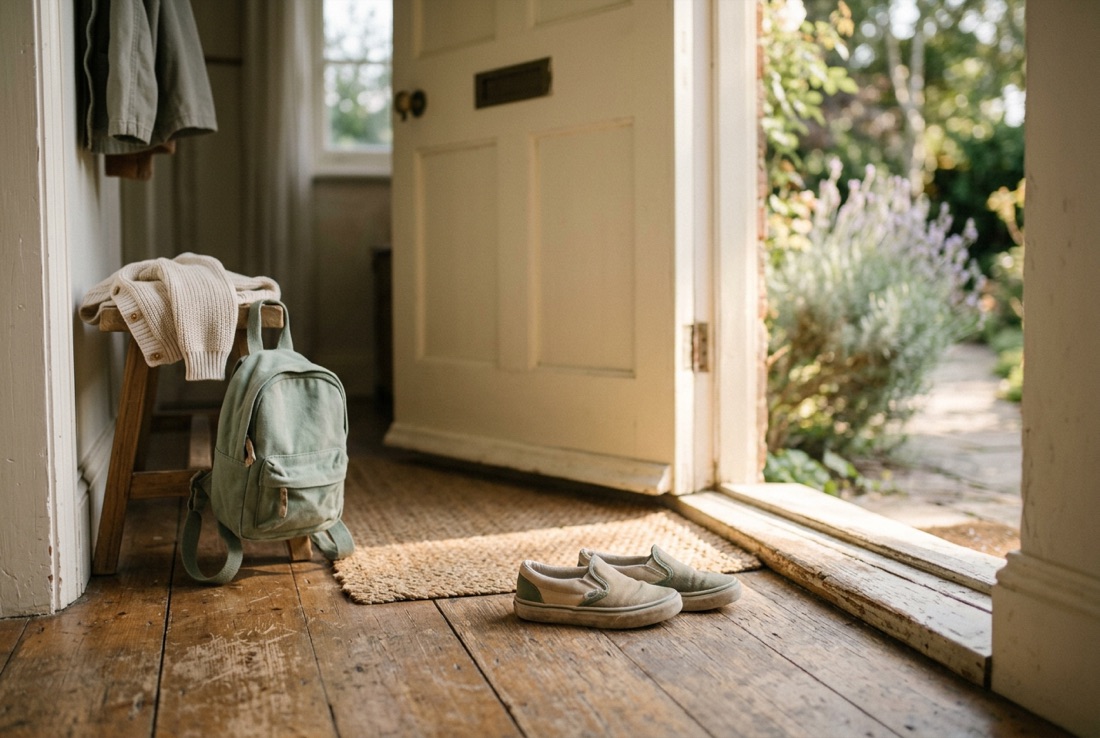
When Your Child Refuses to Go to the Other Parent's Home
When your child refuses to visit a parent, it's rarely rejection. Understand the real reasons and get calm, concrete steps to respond and ease transitions.
7 min read